
What a Business Card Actually Costs Once You Leave the Eurozone
2026-09-03
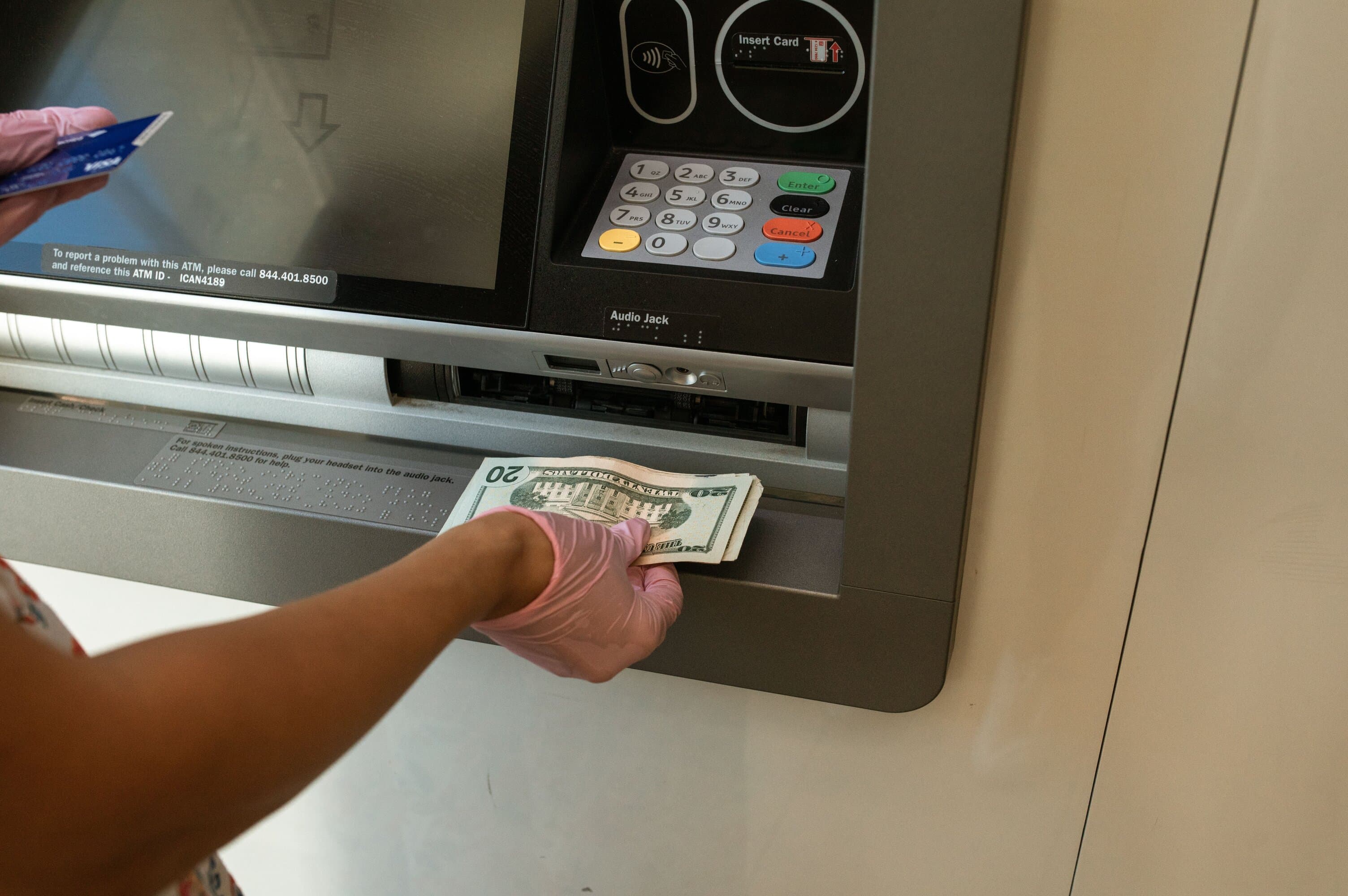
Most founders check card fees once — when they're comparing providers before opening an account — and then never again. That's usually fine, until a business trip, a supplier meeting abroad, or a conference lands outside the eurozone and the card gets used the way it always does: withdraw some cash, pay for a few things, check the balance at an ATM out of habit. None of those three actions cost the same amount they did last week.
On a Polydirection business account, an ATM withdrawal inside the eurozone is a flat 1.35 EUR (Regular Spender tier) or 1.25 EUR (Active Spender). Step outside the eurozone and the fee changes shape entirely: it becomes 1.5% of the amount withdrawn plus 1.5 EUR flat, or 1.3% plus 1.5 EUR on the Active tier. A 500 EUR withdrawal that would have cost 1.35 EUR at home now costs roughly 9 EUR. That's not a rounding difference — it's a structural one, and it's easy to miss if the only fee page anyone read was the "at home" section.
Eurozone vs. Non-Eurozone: Where the Real Gap Is
The pattern repeats across card-present and card-not-present transactions. POS and e-commerce purchases inside the eurozone run 0.3% + 0.15 EUR (Regular) or 0.25% + 0.15 EUR (Active) — low enough that most people don't notice it on a statement. Outside the eurozone, the same purchase jumps to 1.5% + 1.15 EUR on Regular, or 1.1% + 0.15 EUR on Active. On a 2,000 EUR supplier payment made by card while traveling, that's the difference between roughly 6 EUR and 30 EUR.
None of this is unusual for a high-risk business card — cross-border card processing genuinely costs more to run, and interchange rates are higher outside the eurozone almost universally. The point isn't that the fee is unfair. It's that a founder budgeting for a trip or a cross-border payment run should know which side of that eurozone line their spending will land on before it happens, not after the statement arrives.
The Foreign Exchange Markup Is a Separate Line Item
Here's the part that catches people off guard: the eurozone/non-eurozone percentages above don't include currency conversion. If a transaction happens in a currency other than the account's base currency, there's an additional ATM/POS foreign exchange markup of 1% — on both spending tiers, applied on top of whatever the base ATM or POS fee already was.
So a cash withdrawal in, say, Thai baht or US dollars while the account runs in EUR can stack three separate charges: the non-eurozone ATM fee, the flat component, and the 1% currency markup. None of these are hidden — they're all listed on the public fee schedule — but they're listed as separate rows, and it takes actually adding them up to see the total cost of one withdrawal.
Regular Spender vs. Active Spender: Same Card, Different Math
The two tiers aren't just cosmetic labels. Active Spender pays a 6 EUR monthly card fee that Regular Spender doesn't pay at all — but gets a lower percentage on nearly every transaction type: cheaper eurozone ATM withdrawals, cheaper POS fees both in and outside the eurozone, and a card issuance fee that's actually higher (6 EUR vs 4 EUR) but rarely charged more than once.
Whether Active Spender is worth the monthly fee depends entirely on volume. A business making occasional card payments has no reason to pay for a tier built around frequent transactions. A business running regular cross-border card spend — recurring supplier payments, frequent travel, high POS volume — can offset the 6 EUR monthly fee within a handful of transactions through the lower percentages alone. The tier names describe the trade-off honestly; the math just has to be done per business, not assumed.
Limits Matter as Much as Fees
Fees decide what a transaction costs. Limits decide whether it's even possible on the card. The gap between tiers here is wider than the fee gap: Regular Spender caps POS transactions at 2,500 EUR each, while Active Spender allows up to 20,000 EUR per transaction. Monthly top-up limits run from 20,000 EUR (Regular) to 40,000 EUR (Active); yearly, 80,000 EUR versus 200,000 EUR.
For a business that occasionally needs to move a large single payment through the card rather than a wire, hitting a 2,500 EUR ceiling mid-transaction is a worse problem than any fee — it's a declined payment at the worst possible moment. This is the kind of detail that belongs in account setup conversations, not something discovered when a payment bounces.
What This Means for Founders Who Travel or Pay Internationally
None of these fees are exotic or specific to Polydirection — cross-border card economics work roughly the same way industry-wide, and the fee schedule here is public precisely so businesses can plan around it instead of guessing. The practical takeaway is simple: before a trip, before setting up recurring international card payments, or before choosing between Regular and Active Spender, run the actual numbers against expected volume and destinations. A card that's nearly free at home can get noticeably more expensive the moment it crosses a border — and knowing that in advance is the difference between a planned cost and an unpleasant surprise on next month's statement.
Polydirection provides business accounts and payment cards for crypto, gambling, forex and dating businesses. See the full fee breakdown on the fees page.